

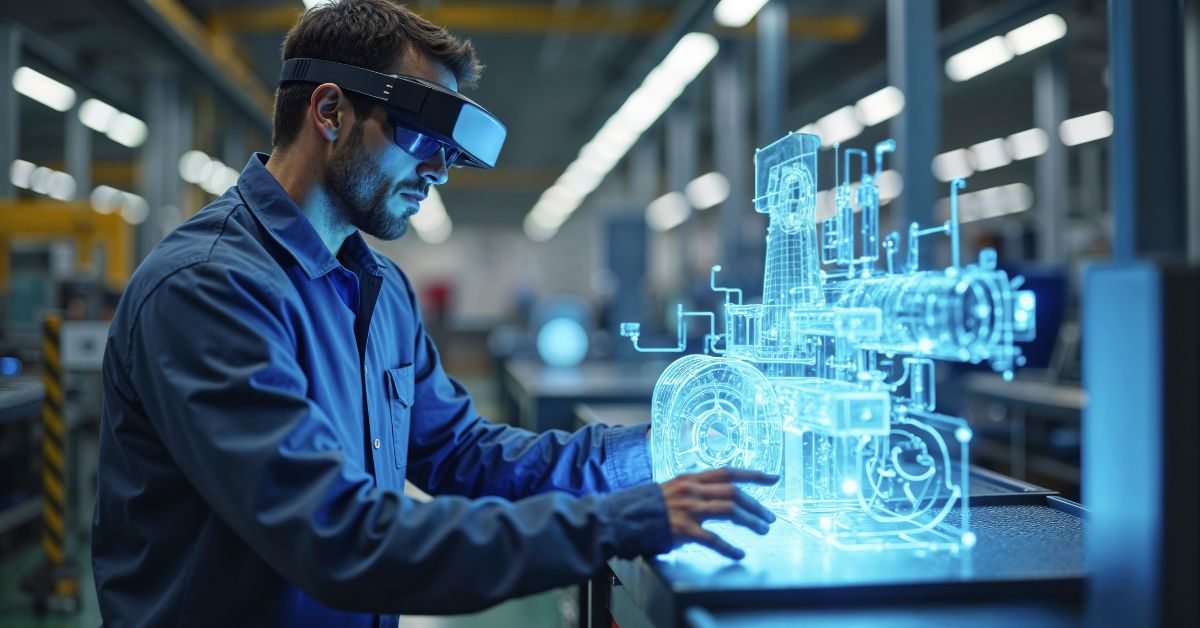
Industrial organizations operate under constant pressure to maximize uptime, control costs, and maintain safety. Equipment failures disrupt production schedules, damage assets, and create cascading operational risks. Traditional maintenance strategies, such as reactive repairs or time-based preventive maintenance, struggle to meet the demands of modern industrial environments. As systems grow more complex, organizations require smarter, data-driven approaches to maintain reliability.
Artificial intelligence has shifted from experimentation to execution in industrial maintenance. AI systems now analyze vast volumes of sensor data, operational logs, and historical failure records to detect early warning signs of equipment degradation. These insights enable maintenance teams to intervene before failures occur, rather than responding after damage happens. The result is fewer unplanned shutdowns, longer asset life, and more predictable operations.
High Plains Technology applies AI with a clear focus on industrial realities. The company builds maintenance intelligence systems designed for heavy machinery, harsh conditions, and legacy infrastructure. Instead of replacing engineers, High Plains Technology empowers them with explainable predictions, actionable insights, and prioritized recommendations that align with real operational constraints.
This guide explains how High Plains Technology delivers AI-driven industrial maintenance at scale. It covers the technology, architecture, methodologies, trust considerations, and measurable business outcomes behind the platform. Decision-makers, engineers, and operations leaders will gain a clear understanding of how AI transforms maintenance into a strategic advantage.
Read for more info: https://technologycougar.com/paypal-restructuring-dollar300m-technology/
What Is High Plains Technology’s AI Approach to Industrial Maintenance?
High Plains Technology designs its AI solutions specifically for industrial environments, where equipment reliability directly impacts safety, productivity, and profitability. Unlike generic analytics platforms, the system accounts for noisy sensor data, irregular operating conditions, and mixed equipment ages. This focus allows AI models to perform reliably in real-world industrial settings.
The platform treats AI as a decision-support system rather than an autonomous controller. Engineers remain responsible for maintenance decisions, while AI provides timely insights that improve judgment and reduce uncertainty. This approach increases trust and ensures that teams adopt the technology as a partner instead of viewing it as a replacement.
High Plains Technology clearly distinguishes between predictive, preventive, and prescriptive maintenance. Predictive maintenance estimates when components will fail. Preventive maintenance schedules interventions based on risk instead of fixed intervals. Prescriptive maintenance recommends specific actions that reduce failure probability and operational impact. AI connects these strategies into a unified maintenance workflow.
How AI Transforms Industrial Maintenance Operations
From Reactive Repairs to Predictive Intelligence
Reactive maintenance waits for equipment to fail before taking action. This strategy increases downtime, raises emergency repair costs, and shortens asset lifespan. Predictive intelligence replaces this model by continuously monitoring equipment health and forecasting failures before they occur.
High Plains Technology analyzes vibration, temperature, pressure, current, and acoustic signals collected from sensors and control systems. Machine learning models identify subtle deviations from normal operating behavior that often appear long before visible symptoms. Maintenance teams gain the ability to plan interventions during scheduled downtime instead of responding to emergencies.
Predictive intelligence also improves coordination across teams. Maintenance planners align tasks with production schedules, procurement teams order parts in advance, and leadership gains confidence in asset reliability forecasts. AI turns maintenance into a proactive and predictable function.
AI Models Used in Industrial Maintenance
High Plains Technology selects AI models based on reliability, interpretability, and operational value. The platform avoids unnecessary complexity and focuses on models that deliver actionable insights.
| AI Model Type | Function | Maintenance Outcome |
| Supervised Learning | Learns from labeled failure data | Predicts failure probability |
| Anomaly Detection | Identifies abnormal behavior | Flags early degradation |
| Time-Series Forecasting | Analyzes trends over time | Estimates remaining useful life |
| Pattern Recognition | Compares assets across fleets | Detects systemic issues |
Each model links directly to a maintenance decision. Engineers understand why the system raises an alert and how it affects operational risk.
High Plains Technology AI Architecture Explained
Data Ingestion Layer (Sensors, SCADA, IoT)
The data ingestion layer collects information from industrial IoT sensors, SCADA systems, PLCs, and legacy equipment. High Plains Technology supports both modern and older assets, ensuring broad compatibility across facilities.
The platform cleans, synchronizes, and normalizes incoming data in real time. This process ensures consistent inputs for AI models despite sensor noise, network delays, or environmental variability. Reliable data ingestion forms the foundation of accurate predictions.
Analytics & Machine Learning Layer
The analytics layer processes incoming data using continuously learning machine learning models. These models adapt as operating conditions change, such as seasonal load variations or production shifts.
High Plains Technology emphasizes explainable AI. Engineers can trace predictions back to specific signals, trends, or thresholds. This transparency simplifies root-cause analysis and strengthens confidence in AI-generated insights.
Action Layer (Alerts, CMMS, ERP Integration)
The action layer converts insights into decisions. AI-generated alerts integrate directly with CMMS and ERP systems, allowing teams to schedule tasks, assign resources, and track outcomes.
Instead of overwhelming teams with alerts, the platform prioritizes actions based on risk and impact. Maintenance leaders gain visibility into asset health, while technicians receive clear, actionable instructions.
Case Study — Reducing Unplanned Downtime in Heavy Industry
A heavy-equipment manufacturing facility experienced frequent unplanned shutdowns due to motor and bearing failures. Reactive maintenance increased downtime and inflated emergency repair costs.
After implementing High Plains Technology’s AI maintenance platform, the facility began monitoring vibration and thermal data across critical assets. AI models detected early degradation patterns weeks before failure.
| Metric | Before AI | After AI |
| Unplanned Downtime | 18 hours/month | 6 hours/month |
| Failure Frequency | 1.4 failures/month | 0.5 failures/month |
| Maintenance Cost | High emergency spend | 28% reduction |
| MTBF | Baseline | +42% improvement |
AI-driven insights allowed teams to reschedule maintenance during planned outages. The facility reduced downtime, extended asset life, and stabilized production without increasing staffing levels.
Proprietary Methodology — AI-Driven Failure Risk Scoring
High Plains Technology uses a proprietary failure risk-scoring methodology to prioritize maintenance actions. The system calculates risk using three weighted factors:
Failure Risk Score = Asset Criticality × Failure Probability × Operational Impact
Asset criticality reflects the asset’s role in production and safety. Failure probability comes from AI predictions. Operational impact measures downtime cost, safety risk, and production loss.
This approach outperforms rule-based alerts because it focuses on business impact rather than raw sensor thresholds. Maintenance teams address the most critical risks first, improving efficiency and outcomes.
Original Data Opportunity — Industry Failure Pattern Analysis
High Plains Technology aggregates anonymized failure data across industries such as manufacturing, energy, and logistics. This aggregated view reveals patterns that individual facilities rarely observe.
AI consistently identifies early indicators such as micro-vibration shifts, thermal drift, and harmonic distortion well before human inspections detect issues. In many cases, AI provides warnings 10 to 30 days earlier than manual checks.
By publishing these insights, High Plains Technology positions its platform as a reference resource for industrial reliability, not just a software solution.
Trust, Security, and Reliability in AI Maintenance Systems
Trust determines whether organizations adopt AI at scale. High Plains Technology addresses this directly through transparency, security, and controlled automation.
The platform explains predictions, tracks confidence levels, and reduces false positives through adaptive thresholds. Engineers understand why the system flags an issue and can validate recommendations before acting.
High Plains Technology follows industrial cybersecurity best practices, including encrypted data transmission, role-based access control, and secure edge deployments. Human-in-the-loop workflows ensure that AI supports decisions rather than replacing accountability.

ROI and Business Impact of AI-Based Industrial Maintenance
AI-driven maintenance delivers measurable financial and operational benefits. Organizations reduce downtime, optimize labor, and extend asset lifespan.
| ROI Driver | Business Impact |
| Downtime Reduction | Increased production availability |
| Predictive Scheduling | Lower emergency repair costs |
| Asset Life Extension | Reduced capital expenditure |
| Labor Optimization | Higher technician productivity |
Leadership teams evaluate ROI by comparing downtime savings and maintenance efficiency gains against implementation costs. High Plains Technology supports this analysis with real operational data instead of inflated projections.
Frequently Asked Questions (FAQs)
What industries benefit most from High Plains Technology AI maintenance?
Manufacturing, energy, oil and gas, logistics, and heavy-equipment industries benefit the most.
Does AI replace maintenance engineers?
No. AI supports engineers by improving visibility and decision quality.
How long does deployment take?
Most deployments begin generating insights within weeks, depending on data availability.
Can the system work with legacy equipment?
Yes. High Plains Technology supports both modern IoT devices and older industrial assets.
How accurate are AI predictions?
Accuracy improves continuously as models learn from operational feedback.
Conclusion
High Plains Technology delivers AI-driven industrial maintenance with a focus on reliability, transparency, and measurable impact. By replacing reactive repairs with predictive intelligence, organizations reduce downtime, control costs, and extend asset life. The platform’s explainable AI, proprietary risk-scoring methodology, and real-world deployment experience set a high standard for industrial maintenance innovation. Organizations that adopt this approach transform maintenance from a reactive necessity into a straegic advantage.
