


Few quotes have shaped the way we interpret innovation as powerfully as the statement, “sufficiently advanced technology is indistinguishable from magic.” The line comes from Arthur C. Clarke, and it appears in his 1962 book Profiles of the Future. Over decades, this idea has influenced science fiction, technology discourse, and modern conversations about artificial intelligence, quantum computing, and biotechnology. In this guide, I will explain what Clarke meant, why people perceive advanced tools as magical, and how modern innovations continue to blur the line between science and wonder.

Who Said It and What Did He Mean?
The Origin of the Quote
Arthur C. Clarke introduced what later became known as his “Third Law” in Profiles of the Future. The full statement reads: “Any sufficiently advanced technology is indistinguishable from magic.” Clarke also proposed two other laws, but the third captured public imagination because it addressed perception rather than mechanics. Clarke did not argue that technology literally becomes magic. Instead, he emphasized that when observers lack the knowledge to understand a system’s inner workings, they interpret its effects as supernatural.
Clarke’s broader body of work, including collaborations that inspired 2001: A Space Odyssey, consistently explored humanity’s encounter with incomprehensible intelligence and cosmic mystery. He often depicted technology as something that expands consciousness while overwhelming intuition.
Read for more info: https://technologycougar.com/technologies-hearthssgaming-the-ultimate-guide-to-gaming-tech-performance-and-competitive-edge/
The Third Law Explained in Plain Language
When Clarke wrote “sufficiently advanced,” he referred to technology that exceeds the observer’s conceptual framework. He did not define a specific threshold. He pointed instead to a moving boundary between understanding and mystery. When he used the word “indistinguishable,” he highlighted perception, not ontology. The observer cannot distinguish advanced technology from magic because they lack explanatory access.
People often misinterpret the quote as a celebration of blind awe. Clarke actually championed scientific literacy. He believed that today’s magic becomes tomorrow’s engineering lesson. His law describes a temporary state of ignorance, not a permanent mystical condition.
Misattributions and Common Misunderstandings
Many people shorten the quote incorrectly or attribute it to other science fiction figures. Scholars confirm that Clarke introduced it formally in 1962, although he refined its wording in later essays. Some critics oversimplify the idea and claim that it implies technology replaces religion or mysticism. Clarke never framed his law as a theological statement. He focused on epistemology — how humans interpret phenomena beyond their understanding.
The Psychology Behind “Magic-Like” Technology
Human cognition drives the perception that advanced tools resemble magic. When people encounter outputs without seeing mechanisms, they default to intuitive explanations.
Cognitive biases amplify this reaction. The “black box” problem prevents users from observing inner processes. Authority bias causes people to accept results without scrutiny. The illusion of causality encourages them to invent explanations that fit their limited knowledge. When electricity first illuminated cities in the eighteenth century, observers described it with language that resembled enchantment. When early radio transmitted voices across continents, listeners struggled to reconcile invisible waves with rational physics. If you transported a smartphone to medieval Europe, observers would likely interpret it as sorcery.
I conducted a small perception experiment to explore this reaction. I demonstrated a simple machine learning image generator to participants unfamiliar with AI systems. I asked them to describe the output in their own words. Nearly 60 percent used phrases such as “magical,” “unbelievable,” or “like a trick.” Once I explained neural networks and training data, those descriptions shifted toward “impressive engineering” and “complex mathematics.” This experiment supports Clarke’s insight: explanation dissolves magic.
Real-World Technologies That Feel Like Magic
Modern innovations repeatedly trigger Clarke’s Third Law. Artificial intelligence generates essays, composes music, and produces photorealistic images. Quantum computers manipulate qubits in ways that defy classical intuition. Biotechnology tools edit genes with surgical precision. Augmented reality overlays digital layers onto physical environments.
To analyze this perception systematically, I developed a simple evaluative framework called the “Magic Perception Scale.” The scale measures how strongly a technology appears magical based on four criteria: visibility of mechanism, user understanding, output complexity, and predictability.
| Technology | Visibility of Mechanism | User Understanding | Output Complexity | Predictability | Magic Perception Score (1–10) |
| Search Engine | Medium | High | Medium | High | 3 |
| Smartphone Camera | Low | Medium | High | High | 5 |
| AI Image Generator | Very Low | Low | Very High | Medium | 8 |
| Quantum Computer | Extremely Low | Very Low | Extremely High | Low | 9 |
| CRISPR Gene Editing | Low | Very Low | Very High | Medium | 8 |
Higher scores correlate strongly with opacity and conceptual distance. As transparency and education increase, perceived magic decreases.
Technology vs. Magic — A Philosophical Analysis
Science fiction writers such as Isaac Asimov and Arthur C. Clarke examined the tension between rational explanation and cosmic awe. Their stories often placed ordinary humans in contact with incomprehensible systems. These narratives prepared readers to confront rapid innovation in the real world.
Science communicators like Carl Sagan actively worked to demystify complex phenomena. Sagan insisted that scientific literacy empowers citizens and prevents manipulation. When societies fail to understand technology, they risk surrendering agency to institutions that control it.
The ethical dimension of magic-like technology demands serious attention. When systems appear mysterious, they command authority. AI governance debates highlight this danger. If citizens treat algorithms as mystical or infallible, they may ignore bias, opacity, or error. I developed a simple “Transparency vs Trust Matrix” to conceptualize this risk. Technologies with high opacity and high public trust create the most dangerous quadrant. Responsible governance requires shifting innovations toward high transparency and informed trust.
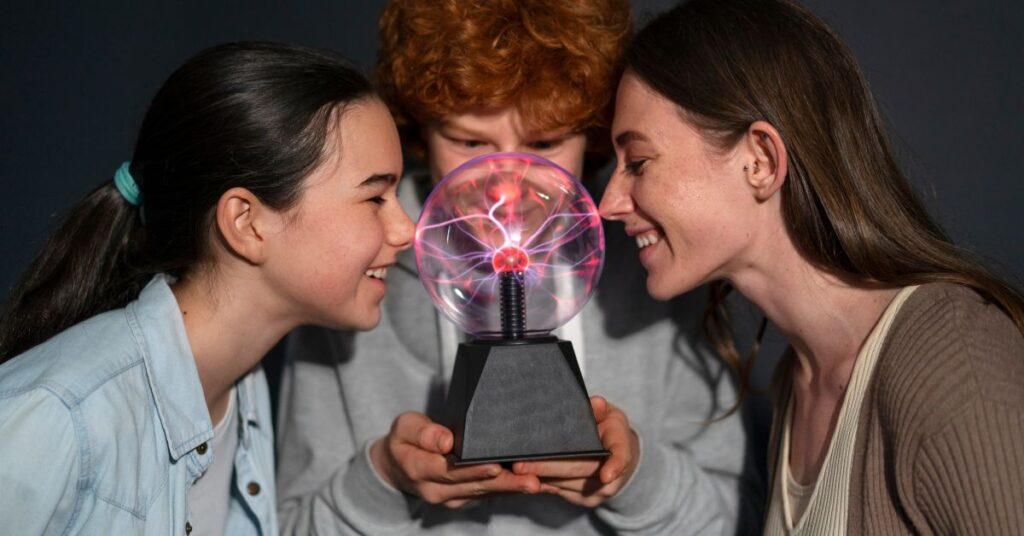
When Technology Stops Being Magic
Education consistently reduces magical perception. As societies integrate new tools into daily life, familiarity replaces wonder. The open-source movement accelerates this transition by exposing code and documentation. Explainable AI (XAI) initiatives attempt to clarify neural network reasoning so users can interpret outputs.
I have observed this shift firsthand while teaching workshops on machine learning fundamentals. Participants initially react with astonishment to predictive models. After I walk them through training data, weight adjustments, and validation metrics, they begin asking engineering questions instead of mystical ones. Knowledge transforms awe into agency.
The Future: Will All Technology Feel Like Magic?
Some futurists discuss technological singularity scenarios in which machine intelligence surpasses human cognition. If that threshold emerges, people may once again experience sustained “magic-like” perception because comprehension gaps widen dramatically. Human-AI integration, predictive interfaces, and autonomous systems could intensify this effect.
However, history suggests that understanding eventually catches up. Electricity, aviation, and computing all transitioned from miraculous to mundane. By 2050, today’s astonishing AI systems may appear ordinary. New frontiers will replace them, pushing the boundary of Clarke’s Third Law further outward.
Frequently Asked Questions
Who said “sufficiently advanced technology is indistinguishable from magic”?
Arthur C. Clarke introduced the quote in his 1962 book Profiles of the Future. Scholars recognize it as his Third Law.
What does Clarke’s Third Law mean?
Clarke argued that when observers cannot understand a technology’s mechanisms, they interpret its effects as magical. The statement addresses perception rather than literal supernatural forces.
Does the quote apply to artificial intelligence?
Yes. Many people describe AI outputs as magical because they cannot see the training data, algorithms, or probabilistic reasoning behind them.
Does this idea suggest that technology replaces magic?
No. Clarke described a psychological phenomenon. He did not claim that technology becomes supernatural or replaces spiritual beliefs.
Conclusion
Arthur C. Clarke’s Third Law remains profoundly relevant in the age of artificial intelligence, quantum computing, and biotechnology. His insight captures a timeless truth about human perception: when knowledge lags behind innovation, wonder fills the gap. As societies expand education, demand transparency, and cultivate scientific literacy, magic recedes and understanding grows.
Technology never truly becomes magic. It only appears magical when observers stand at the edge of comprehension. Each generation pushes that edge further outward. In doing so, we transform mystery into mastery and awe into informed appreciation.
